
Platform 01
CLOPAM®
Closed-Packed Aero-Pressurized Microneedle
Dissolving microneedle patch
A proprietary dissolving microneedle array patch (DMAP) platform, optimized for systemic and local drug delivery.
CLOPAM for your program
Peptides · Hormones · Vaccines · Small molecules · mRNA
~80%
Bioavailability
Of the SC injection, proven in humans with a high-molecular-weight peptide — exceptionally high for a patch.
Tip-loaded
Precision dosing
Patented aero-pressure drying concentrates the drug in the needle tips.
In-mold
Product integrity
Every needle stays aseptic in its own sealed mold until use.
Aseptic GMP Ready
Sterile drug product
The U.S. FDA regards this patch as a sterile drug product — and ours is made on fully aseptic GMP lines.
01 — The problem
What CLOPAM solves
For patients
Injections get dropped
Frequent injections, needle fear and clinic visits wear patients down, and most stop long before the treatment is done.
64.8%of adults without diabetes stopped their GLP-1 injection within a year · JAMA Netw Open 2025
Sharps and training
Needles leave sharps waste, need trained hands, and make every dose feel like a medical procedure.
For drugs
The skin keeps big molecules out
Creams and gels only carry small, oily molecules. Peptides, proteins, oligonucleotides and hydrophilic drugs cannot cross the stratum corneum.
500 Dawhere creams and gels stop getting through
Pills lose the dose
By mouth, the gut and the liver's first pass destroy most of a large or hydrophilic drug, and the whole body takes the side effects.
Cold-chain cost
Many biologics and vaccines depend on refrigerated storage and distribution.
For microneedles
Sterility lost after the mold
Most dissolving patches leave their mold for blister packaging, where needles meet contaminants, humidity and force. It is why so few have reached the market.
Drug left in the backing
When the drug spreads through the whole needle and its base, much of the dose never enters the skin.
No aseptic scale-up
Microneedle patches have lacked fully automated, aseptic manufacturing that can supply trials and the market.
02 — The CLOPAM difference
The bottleneck, broken.
Every needle aseptic, from plant to patient
Other dissolving microneedle patches
- Pulled out of the silicone mold and moved into blister packaging
- Needles exposed to contaminants, humidity and physical force in storage and transport
- Tips bend, soften or break, and sterility is hard to hold
CLOPAM
- Stays in its own disposable mold until the patient applies it
- Hermetically sealed against contaminants, moisture and force
- Every single needle reaches the skin aseptic and intact
Keeping each needle aseptic through storage and distribution is the bottleneck that has kept dissolving microneedles from commercial products. CLOPAM solves it by design.
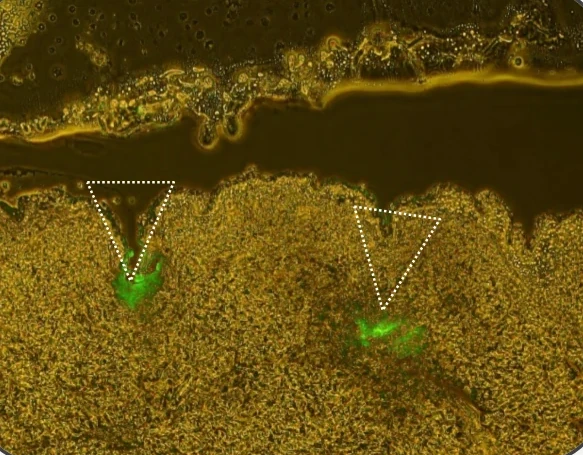
Drug concentrated at the tips
Our patented aero-pressure drying drives the drug into the needle tips. The tips are what enter the skin, so more of the dose is delivered and less is left behind in the backing.
- Optimal penetration depth
- No injection pain
- Consistent, uniform application
03 — How it works
CLOPAM, step by step
Step 01
Apply
The applicator lifts the patch straight out of its sealed mold and presses it onto the skin; an audible click confirms it.
Step 02
Dissolve
The microneedles dissolve quickly in the skin's interstitial fluid.
Step 03
Release
The drug, concentrated in the needle tips by aero-pressure drying, is released into the skin.
Step 04
Absorb
It acts locally in the skin or is absorbed into systemic circulation, depending on the payload.


CLOPAM patch & applicator
- Precision dosing: patented aero-pressure drying concentrates the drug in the needle tips.
- Aerodynamic crafting controls how the needles form and are handled.
- Each patch stays in its own sealed mold, so every needle is aseptic and intact until use.
- Patented applicator: vertical extraction of the needles from the mold and consistent force on application, confirmed by an audible click.
- Can be applied to the forearm, upper arm or back.
04 — Proof of concept
Proven in people: ~80% of SC bioavailability
~80%
Relative bioavailability vs SC injection
Dose-normalized, with a high-molecular-weight peptide in healthy volunteers. Consistent across pilot PK studies and patch doses.
In human · pilot PK studies, patch vs SC injection
Healthy volunteers received a high-molecular-weight peptide as the CLOPAM patch or as the marketed SC injection. Patch doses are higher than the SC dose, so bioavailability is compared dose-normalized.
SC injection (marketed product)CLOPAM patch
Plasma concentration
2nd pilot study
SC 0.5 mg against a 2.0 mg patch
- Dose · SC : patch
- 0.5 mg : 2.0 mg (1 : 4)
- Relative bioavailability
- 88%
Consistent across pilot studies
Dose linearity
3rd pilot study
SC 1.0 mg against three patch doses; fainter = lower dose
- Dose · SC
- 1.0 mg
- Dose · patch
- 0.5 · 1.0 · 2.0 mg
- Relative bioavailability
- 83% · 85% · 82%
Dose-linear · 3 dose levels
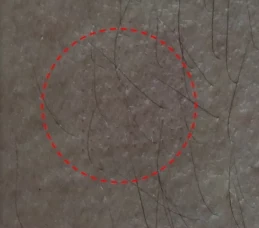
Skin irritation
2nd pilot study
Real images of the application site after the patch was worn for 2, 4 and 8 hours.
2 h wear 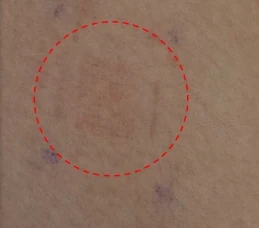
4 h wear 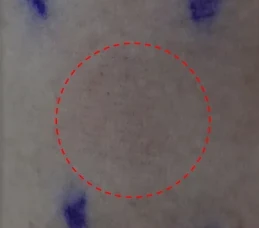
8 h wear Almost no skin irritation
- Severe or clinically significant irritation
- None reported
Mild and transient
The peptide and the reference product are not named. Relative bioavailability is dose-normalized to the SC injection. Full datasets are shared with partners under CDA.
Request the data under CDA05 — GMP manufacturing
The world's first fully aseptic microneedle patch plant
 Run with Daewoong Group's GMP and quality expertise — the group behind U.S. FDA cGMP manufacturing of biologics such as Nabota®.
World first
Fully aseptic GMP · in operation since
3Q 2026
Built for late-stage trials, clinical supply and initial commercial supply, with room to grow.
Planning a patch program? Production slots on the aseptic lines are limited — contact us to secure one.
Reserve a GMP slot
Phase 01 · Since 2024
Lab scale
Yongin, South Korea
- Process
- Microbial-limit controlled, semi-automated; passed MFDS GMP inspection
- Status
- In operation; Phase 1 clinical supply since 2024
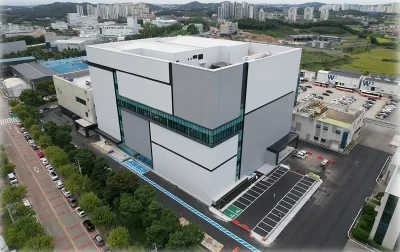
Phase 02 · Since 3Q 2026
World firstPilot scale
Hyangnam, South Korea
- Process
- Fully automated and aseptic, to global standards
- Status
- In operation since 3Q 2026
- Use
- Late-stage trials, clinical supply and initial commercial supply

Phase 03 · 2030
Commercial scale
Osong, South Korea · new facility
- Process
- Fully automated and aseptic, to global standards
- Status
- Planned, with budget and site secured; operational by 2030
- Use
- Full-scale commercial production
Real images
Inside the aseptic plant
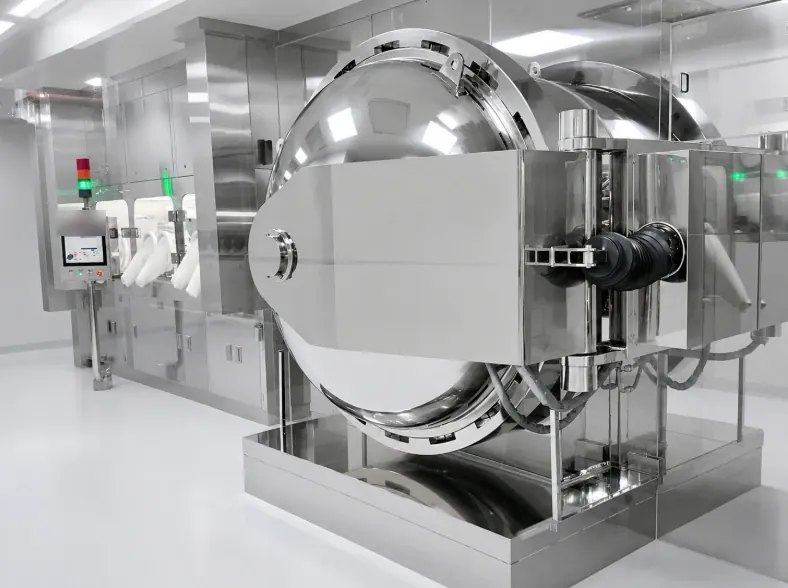
Isolator line and process chamber

Glove ports: no open handling
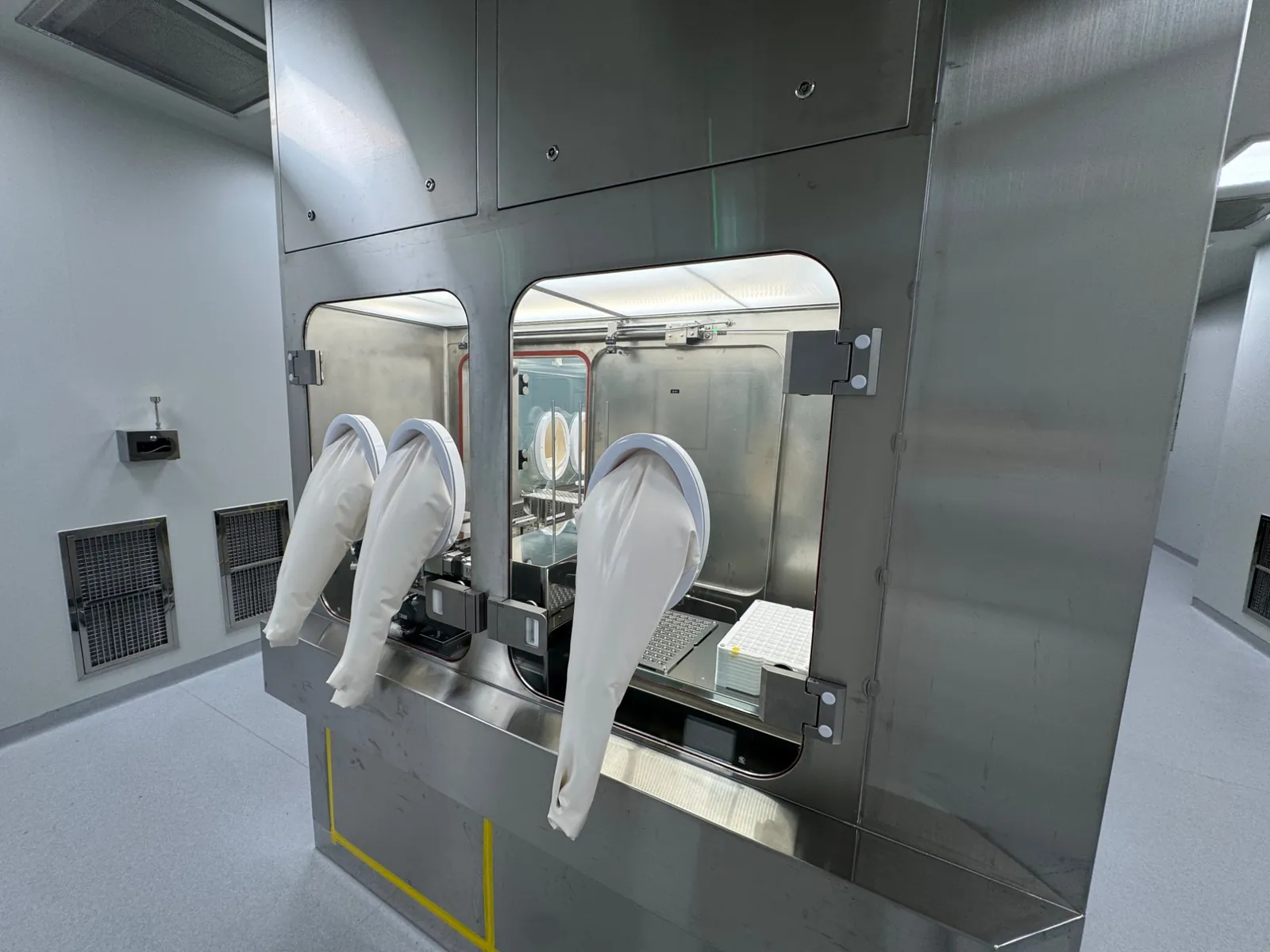
Aseptic isolator workstation
06 — Compatible payloads
What you can bring
Peptides
Obesity, MASH and endocrine peptides, kept on their weekly schedule as a patch.
Phase 1 IND approvedSee the caseHormones
Protein hormones given by frequent injection, moved to a self-applied patch.
IND approvedVaccines
Antigens placed among the skin's immune cells, aseptically, needle by needle.
PreclinicalSee the caseHard-to-deliver small molecules
Hydrophilic or poorly absorbed drugs that creams, gels and pills cannot carry well.
mRNA
mRNA and other nucleic acids, delivered precisely into the skin's immune layer.
07 — Partnering use cases
How partners use CLOPAM
01
Injectable → Patch
Reformulate an approved or clinical-stage injectable as a self-administered patch.
02
Weekly obesity & MASH peptides
Keep a GLP-1-class peptide on its once-weekly schedule — as a patch instead of an injection.
See the case03
Large molecules, topically
Take drugs too large or hydrophilic for a gel, and too costly as a pill, into the skin.
See the case04
New formulation co-development
Design a patch product around a new molecule from the start.
05
Life-cycle extension
A new, needle-free presentation of a marketed drug: new IP and a longer life.
08 — IP & readiness
Built to be partnered
- Intellectual property
- [TBD: CLOPAM patent status overview]
- PatentedAero-pressure manufacturing that concentrates the drug in the needle tips
- PatentedApplicator that lifts the patch vertically out of its mold and applies consistent force
- Manufacturing readiness
- Fully automated, aseptic GMP plant in Hyangnam, Korea, in operation since 3Q 2026, after a lab-scale site in operation since 2024; commercial scale in Osong by 2030.